
BALL PYTHON CARE
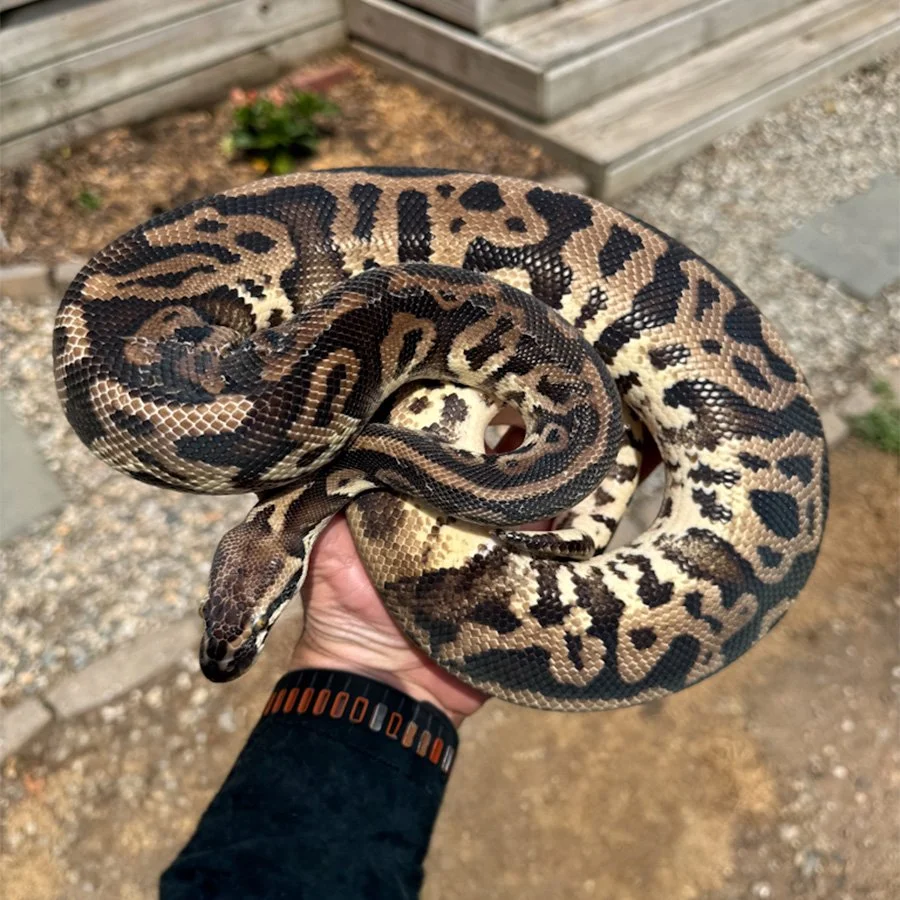
Ball pythons are known for their beautiful patterns, generally calm temperament, and manageable size. With the right setup and consistent care, they can make wonderful long-term pets.
Habitat
Your ball python's enclosure should provide enough room to comfortably stretch out, explore, and move between warmer and cooler areas.
Provide at least two secure hiding places — one on the warm side and another on the cool side. Ball pythons feel most comfortable when they have snug places to retreat.
Branches, plants, cork bark, and other enrichment can also give your snake opportunities to explore and exhibit natural behaviors.
Temperature & Humidity
Ball pythons need a temperature gradient so they can regulate their body temperature.
Aim for approximately:
Warm hide: 86–90°F
Cool side/hide: 72–80°F
Humidity: Generally 60–80%
Use reliable digital thermometers and a hygrometer to monitor conditions. Any heating equipment should be appropriately controlled with a thermostat to prevent overheating or burns. Humidity is especially important for healthy shedding and respiratory health.
Water
Fresh, clean water should always be available. Choose a sturdy water bowl large enough for your snake to use comfortably and clean it regularly.
Feeding
Ball pythons are carnivores and typically eat mice or rats. Frozen-thawed prey is generally preferred because live rodents can injure snakes.
The size and frequency of meals depend on your python's age, weight, body condition, and activity level. Younger snakes generally eat more frequently than adults.
Handling
Give a new ball python time to settle into its enclosure before frequent handling.
Once comfortable, ball pythons can generally be handled calmly and gently. Always support the snake's body, avoid sudden movements, and give it space when it is shedding, stressed, or has recently eaten.
Healthy Ball Python Basics
A healthy ball python should generally have clear eyes when it isn't preparing to shed, healthy skin and scales, normal breathing, appropriate body condition, and regular behavior.
Changes in breathing, repeated difficulty shedding, unusual discharge, injuries, mites, significant weight loss, or other concerning changes should be discussed with an experienced reptile veterinarian.