
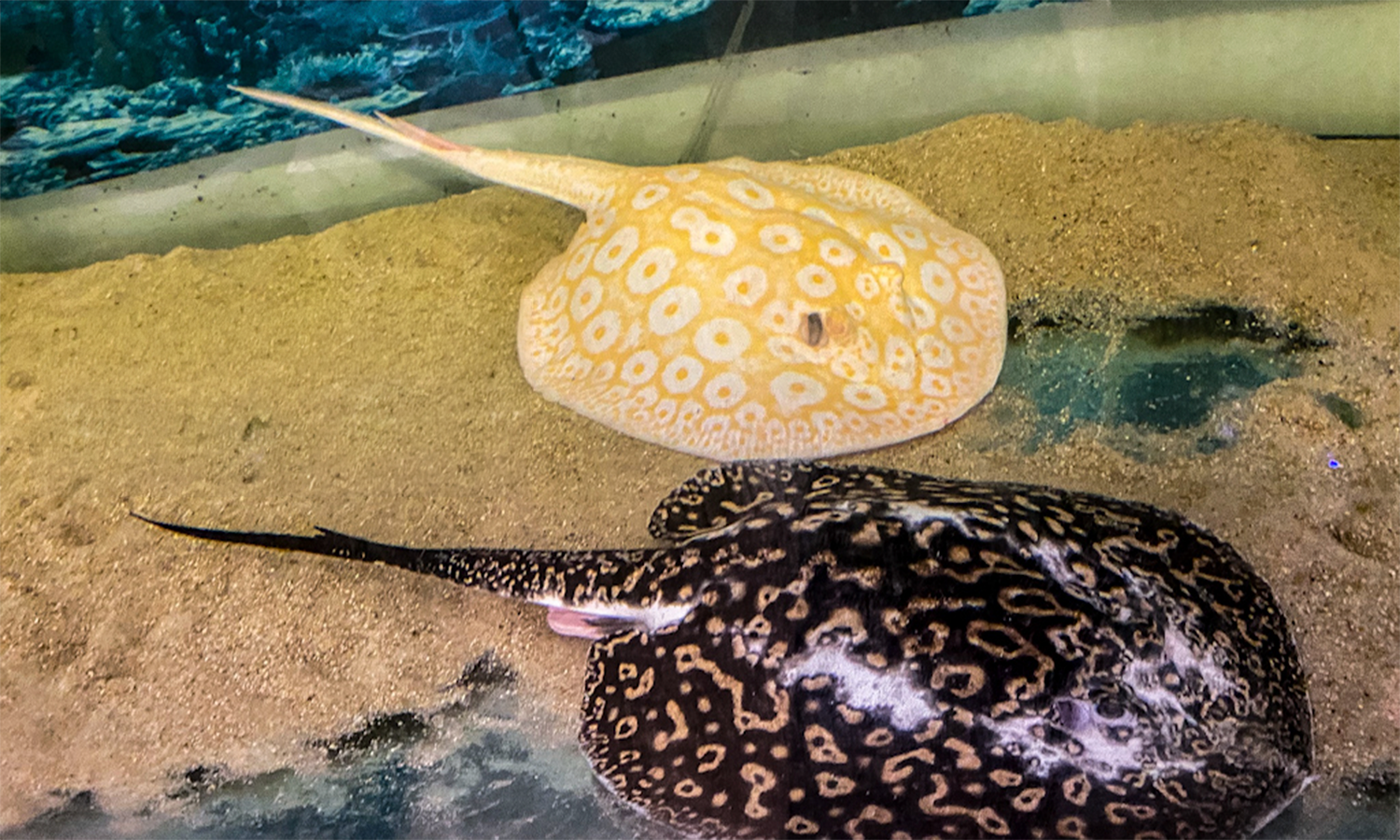
STINGRAY CARE
It is critical to the life and the experience of you pet, that you take care of their needs and create an environment that provides long term comfort and success for the animal.
Aquarium
Freshwater stingrays are incredible animals, but they require a much more advanced aquarium setup and level of care than most freshwater fish.
Freshwater stingrays need a very large aquarium with plenty of bottom space. Width and length are especially important, because rays spend most of their time along the bottom of the tank.
Adult housing requirements vary considerably by species, but many freshwater stingrays require aquariums of 180 gallons or larger. Use fine, soft sand or another ray-appropriate bottom and avoid sharp rocks, decorations, or equipment that could injure the ray's delicate underside.
Water Quality
Freshwater stingrays are particularly sensitive to poor water quality. As a general guideline:
Temperature: Approximately 75–82°F
Ammonia: 0 ppm
Nitrite: 0 ppm
Nitrate: Ideally below 10 ppm
The ideal pH and other water parameters can vary depending on the species and the conditions in which the ray was raised. Stable water conditions are extremely important. A fully cycled aquarium, powerful biological filtration, regular testing, and frequent water changes are essential.
Feeding
Freshwater stingrays are carnivores. Depending on the species and individual ray, foods may include:
Earthworms
Shrimp
Mysis shrimp
Quality sinking carnivore pellets
Appropriate fish or seafood
Other high-quality frozen foods
A varied diet helps provide balanced nutrition. Young, growing rays may also require more frequent feeding than adults.
Tank Mates
Choose tank mates carefully. Fish should be large enough that the stingray won't view them as food, but peaceful enough that they won't nip, harass, or compete aggressively with the ray.
Avoid overcrowding. More animals also mean more waste, which makes maintaining the pristine water quality stingrays require more difficult.
Stingray Safety
Never attempt to grab a stingray or handle its tail. Be aware of the ray's location whenever performing aquarium maintenance, and use appropriate procedures and equipment if a ray ever needs to be moved.
Research proper stingray handling and emergency procedures before bringing one into your home.
Drip Acclimation for New Sting Rays
Bringing home a new fresh water sting ray is exciting, but it’s important to give them time to adjust before introducing them to their new aquarium. Drip acclimation is a gentle process that slowly introduces water from your aquarium into the water your fresh water sting ray arrived in. This allows the sting ray to gradually adjust to differences in temperature, pH, hardness, and other water conditions, helping reduce stress and the risk of shock.
To drip acclimate, place your new sting and their transport water into a clean container, then use airline tubing to slowly siphon water from your aquarium into the container—typically at a rate of a few drops per second. Once the water volume has roughly doubled, carefully transfer the sting ray into the aquarium without adding the transport water to your tank.
Taking a little extra time to acclimate your sting ray can make their transition much smoother and help give them the best possible start in their new home.